Service

Service

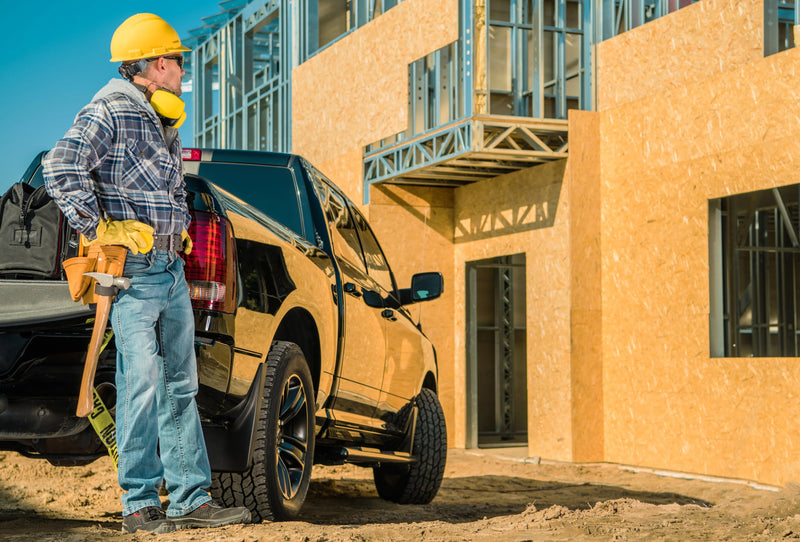
Service and utility body trucks keep businesses running across every trade. Pierce Arrow Inc. supports service professionals with Lodar wireless control systems that operate hydraulic cranes, liftgates, and tool platforms remotely. Our hydraulic power units and components—cylinders, valves, pumps, and fittings—integrate seamlessly into custom service body builds, while our dump kits allow service trucks to unload materials on the job site without a separate dump truck.

Controls — Wired

Pendant controls give service technicians direct control of cranes, liftgates, and mounted equipment from the ground. The 20ft cord on the 2-button pendant provides reach around the full length of a service body. The 4 and 6-button pendants handle multi-function service trucks where the tech needs to run crane boom, rotation, and winch functions — or liftgate and auxiliary circuits — from a single controller without switching between remotes.

Controls — Wireless

Wireless remotes let service technicians operate truck-mounted equipment while positioned at the work — on a roof while the crane lifts an HVAC unit, at the back of the truck while the liftgate lowers heavy equipment, or across a job site while an auxiliary pump runs. The 4 and 6-function systems handle the multi-circuit setups common on fully outfitted service bodies where crane, winch, outrigger, and liftgate functions all need remote access.

Hydraulic Power Units

Service trucks — HVAC, plumbing, electrical, and general maintenance — run multiple hydraulic functions from a single power source: liftgates, cranes, compressor drives, and auxiliary tool circuits. The 2-way HPU handles standard lift and lower operations. The 4-way pump powers multi-circuit service bodies where a crane, outrigger, and liftgate may all need to operate independently. Compact, self-contained units fit the tight mounting spaces on service body builds.

Dump Bed Kits

Service operations generate debris and haul materials — old HVAC units, demolished drywall, pipe and fittings, and bulk supplies. A dump bed kit lets the service truck unload at the shop or landfill without hand-unloading. The factory bed kit works for service fleets that keep their OEM pickup beds for a professional appearance at customer sites, while the flat bed kit suits operations running dedicated material hauling trucks alongside their service bodies.

Lodar Industrial Controls

The 10-function Lodar system serves service truck builds with complex hydraulic and electric setups — multiple crane functions, outriggers, winch, and auxiliary circuits that exceed what a standard 6-function remote can handle. Purpose-built for industrial environments with IP-rated electronics that handle the daily wear of field service work.


Frequently Asked Questions

Can't find the answer you're looking for? Contact our team and we'll get back to you.

Can I use a fuse to protect my winch and vehicle?
Yes, a fuse or circuit breaker is highly recommended to protect your winch and vehicle from electrical damage. A 400-amp circuit breaker is ideal, as it handles amperage spikes during winching and resets easily, unlike costly 400-amp fuses. Alternatively, a cut-off switch is a budget-friendly option to disconnect power during a short circuit, though it won’t prevent spikes. Always use properly rated devices for safety.
What precautions should I take when pulling heavy loads?
Place a heavy blanket, jacket, or winch dampener over the wire rope during heavy pulls. If the rope snaps, the cloth can help absorb energy and reduce dangerous backlash. Ensure the item is thick, secure, and placed midway along the taut rope. This simple step protects you and others nearby during tasks like vehicle recovery or heavy towing.
How can I provide a safe anchor point while winching?
Use a D-ring or bow shackle rated for your winch’s pulling capacity with a tree trunk protector or similar anchor strap. Select a sturdy anchor like a healthy tree or vehicle tow point. Wrap the protector around the anchor, attach the shackle, and connect the winch cable. Ensure all gear is rated for the load and check connections before winching. This prevents equipment failure or injury during tasks like vehicle recovery.
How can I double my winch pulling capacity?
You can double your winch’s pulling capacity by using a snatch block, which is a pulley system that redirects the winch cable. Here’s how it works: Attach the snatch block to the load or a secure anchor point, then run the winch cable through the pulley and back to a fixed point, like the tow hook on your vehicle. This setup effectively halves the load on the winch by distributing it across two cable lines, allowing it to pull twice as much weight.
How much pulling power do I need from my winch?
Choose a winch with a pulling capacity at least 1.5 times your vehicle’s gross weight to handle obstacles like mud, snow, sand, water, or steep hills. For example, a 6,000-pound vehicle needs a winch rated for at least 9,000 pounds. This ensures enough power for safe recovery in tough conditions without overloading the winch.
How do I secure a load with my winch?
Use ratchet straps or tie-downs to secure a load safely. Winches are not suitable for tying down loads, as constant movement or vibration can damage their gears. Choose high-quality ratchet straps rated for the load’s weight and attach them to secure anchor points on your vehicle or trailer. Check straps for wear and ensure they’re tight to prevent shifting during transport.
What maintenance is required on my winch?
Regular maintenance extends your winch’s life. Lubricate all grease points, tighten bolts, and inspect electrical connections, especially at the battery, for corrosion or loose fittings. Check the wire rope for wear, flat spots, or broken strands; replace if damaged. Refer to your winch manual for specific checks. Routine care prevents breakdowns and ensures safe operation during tasks like vehicle recovery.
How do I re-spool the wire rope onto my winch?
Always wear leather gloves when re-spooling wire rope to protect your hands. Never use bare hands, as the rope can cause cuts or burns. Keep a slight load on the rope to spool it evenly. Guide the rope with one gloved hand while using the remote control in the other to operate the winch. This ensures safe, tight spooling for effective winching.
What should I do about my vehicles wheels while winching?
Place wheel chocks or sturdy blocks under your vehicle’s wheels before winching. This prevents the vehicle from rolling forward or backward, keeping it stable and safe during the pull. Use solid materials like wood, rubber chocks, or stones, and position them snugly against the tires. This is especially important on slopes or loose terrain during tasks like vehicle recovery.
Can I increase the line speed of my worm gear winch?
Yes, but it reduces pulling power by about 50%. For electric winches, swapping gears can boost line speed up to 50%. For hydraulic winches, replacing the motor with one of different displacement can increase speed. Consult your winch manual or a professional for proper modifications to ensure safe operation and avoid damage during tasks like vehicle recovery.

Videos

Check out how to install the PIERCE 2T Dump Bed Kit with the official PIERCE overview on YouTube.

Check out how to install the PIERCE 2T Dump Bed Kit with the official PIERCE overview on YouTube.

Factory Bed Dump Kit

Pairing the 92 Series Lodar Remote & Transmitter

Pairing the 92 Series Lodar Remote & Transmitter

10 Function IP Wireless Control System | 92 Series | FET Receiver

9,000 lbs. 8" Drum Industrial Electric Winch

9,000 lbs. 8" Drum Industrial Electric Winch

9,000 lbs. 8" Drum Industrial Electric Winch

9,000 lbs. 8" Drum Industrial Electric Winch

9,000 lbs. 8" Drum Industrial Electric Winch

9,000 lbs. 8" Drum Industrial Electric Winch

9,000 lbs. 8" Drum Industrial Electric Winch

9,000 lbs. 8" Drum Industrial Electric Winch

9,000 lbs. 8" Drum Industrial Electric Winch

9,000 lbs. 8" Drum Industrial Electric Winch

9,000 lbs. 8" Drum Industrial Electric Winch

9,000 lbs. 8" Drum Industrial Electric Winch