


If you've spent any time around PIERCE equipment, you've probably heard the word Lodar thrown around. Maybe you saw it on a remote, maybe someone mentioned it when you were shopping for a winch control, or maybe you caught it on our website and had no idea what it meant.
Here's the plain-English version.
What Is Lodar?
Lodar is a brand of wireless radio remote control systems — think of it like a garage door opener, except instead of opening a door it controls heavy equipment. Hoists, winches, dump beds, hydraulic systems, cranes — if it moves and you need to control it from a distance, there's a Lodar for it.
The name comes from the original manufacturer, and the system has been used in industrial and agricultural applications for decades. It's not a gimmick or a novelty. Ranchers, contractors, and equipment operators across the country rely on it because it works consistently in the field, where consumer-grade wireless products fall apart.
PIERCE carries Lodar systems and builds custom control setups using Lodar components. So, when you buy a PIERCE wireless remote setup, you're getting hardware that's been proven in real working conditions — not something cobbled together from whatever was cheapest.
How Does It Work?
A Lodar system has two parts: a transmitter (the handheld remote you carry) and a receiver (the unit mounted on your equipment that actually triggers the function).
You press a button on the transmitter. The receiver picks up the signal and activates the corresponding function — extend the cylinder, engage the winch, raise the dump bed, whatever you've set it up to do.
The transmitters are rugged. They're built to take drops, mud, rain, and the kind of abuse that comes with working on a ranch or job site. The receivers are typically mounted in a protected location on the equipment and wired into the control circuit.
Range varies by model, but most Lodar systems are rated for 300 feet or more in open conditions. That's more than enough to stand clear of a load, work from the opposite side of a trailer, or operate equipment from a safe distance.
Why Wireless Instead of a Pendant?
A pendant control — the wired box on a coiled cord — works fine for a lot of applications. If you're always standing in the same spot relative to your equipment, a pendant is simple and reliable.
But there are plenty of situations where a cord is a liability.
If you're moving hay bales and need to reposition yourself constantly, a cord gets in the way. If you're operating a crane or hoist where you need to see the load from multiple angles, being tethered to one spot is a problem. If you are towing a car on the side of the highway, you need to be safely out of the way of oncoming traffic. If you're working alone and need to both drive and control a piece of equipment, wireless is the only practical option.
Wireless also removes the cord as a wear point. Pendant cords take a beating — they get pinched, stepped on, bent at the connector, and eventually they fail. A Lodar transmitter in your shirt pocket doesn't have that problem.
What Equipment Can Lodar Control?
Lodar systems are built around a channel system — each channel controls one function. A two-channel transmitter controls two functions, a four-channel controls four, and so on.
At PIERCE, we use Lodar in setups for:
- Winches — engage, disengage, speed control
- Dump bed kits — raise and lower the bed
- Hoists and lifts — up, down, hold
- Custom pendant replacements — anything currently run by a wired remote can typically be converted
We also build fully custom Lodar-based control panels for manufacturers who need a specific configuration for their product line and branding. If you need four functions with custom button labeling and a specific connector type, that's something we can put together.
Is It Hard to Set Up?
Pairing a Lodar transmitter to its receiver is straightforward once you know the sequence — it takes about two minutes. We have a step-by-step guide and video walkthrough for both the 11 Series Mini and the 92 Series that covers exactly how to do it.
If you're buying a Lodar system through PIERCE, we can pre-pair it before it ships so it's ready to use out of the box.
The Bottom Line
If you're running equipment that currently requires you to stand in one spot, lean across a cab, or deal with a cord that's always in the wrong place — Lodar is worth a serious look. It's not complicated, it's proven, and it removes a real frustration from the workday.
PIERCE carries Lodar remotes and builds custom setups for everything from basic winch control to fully branded multi-function panels. If you're not sure which system fits your application, give us a call at 940.538.5643 and we'll help you figure it out.
Watch: Lodar Wireless Control Systems Overview → (link to video library watch page)
PIERCE — Pulling For You Since 1976 | Henrietta, Texas
Watch: How to Test a PIERCE Winch Motor
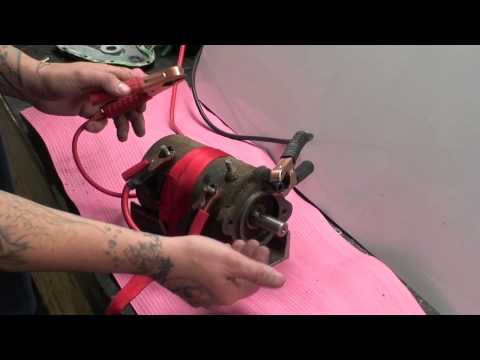
This is a test on a PS534H and PS534HD motors to PS654 PIERCE winches. This video will also show signs of a faulty motor.